If you would like to see all 24 videos of Takahashi Michiko available on YouTube please click→here.


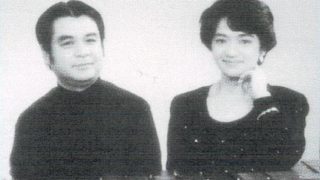
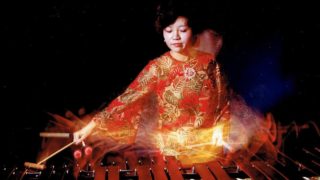
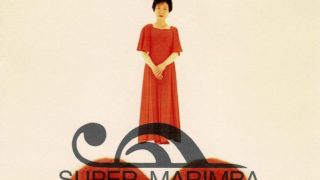
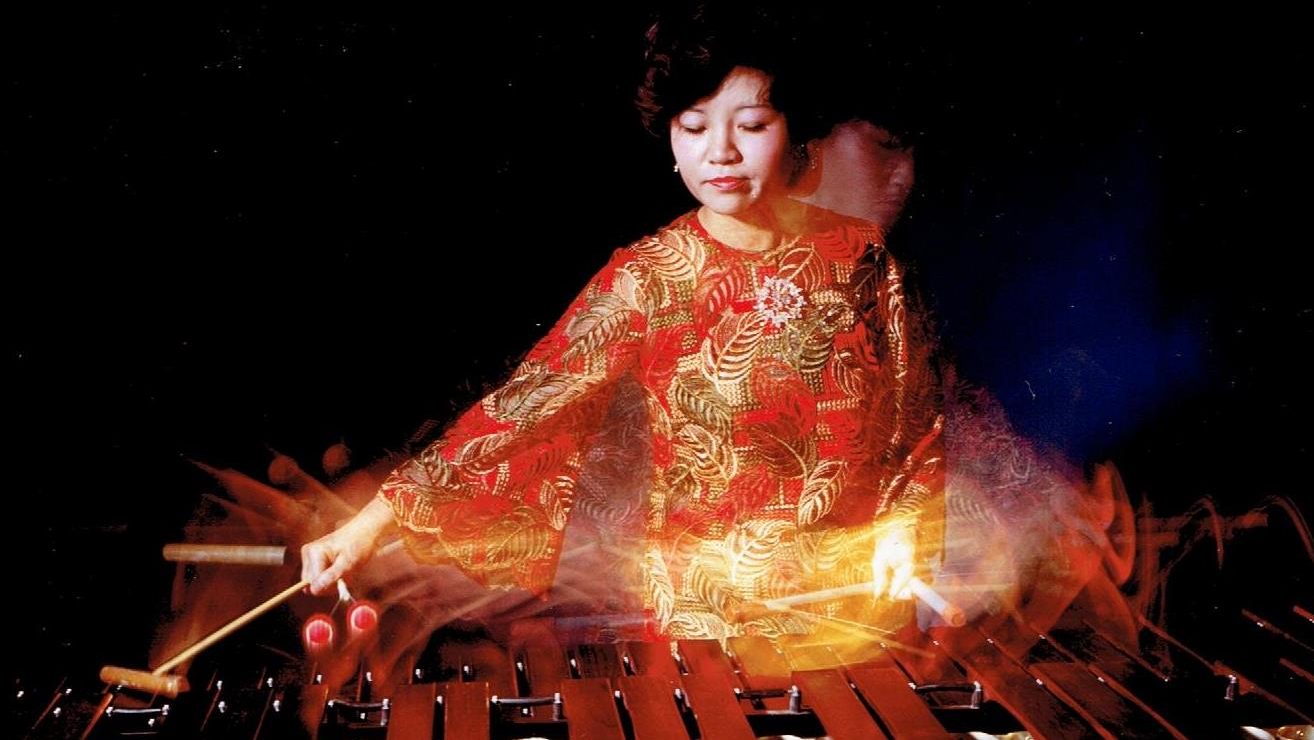
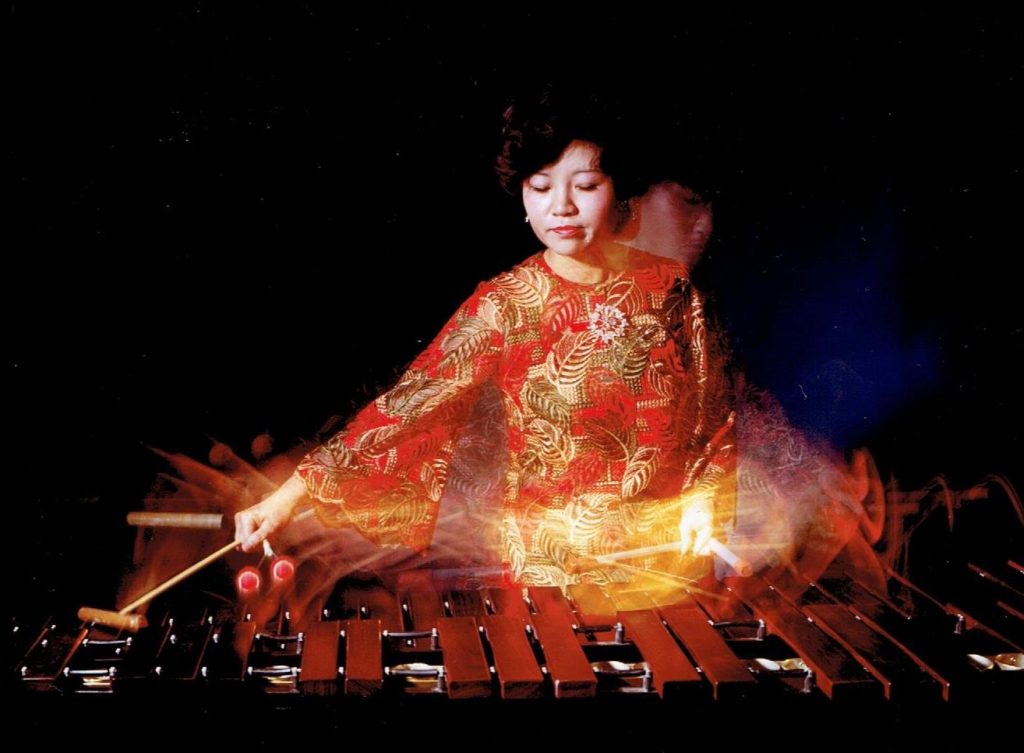
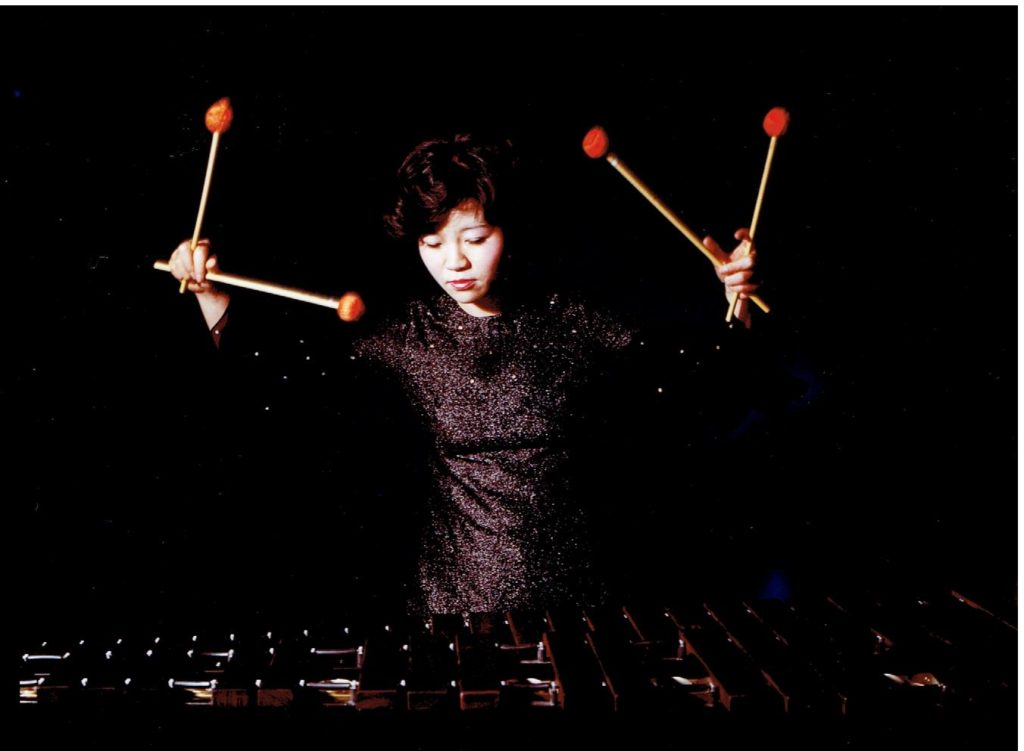
Profile of Michiko Takahashi
Marimba and percussion player. Career (major academic and professional background) March 1962: Graduated from Tokyo University of the Arts, Faculty of Music, Department of Instrumental Music, Percussion Major March 1964: Completed Tokyo University of the Arts, Faculty of Music, Specialized Course April 1962: Part-time lecturer at Ueno Gakuen University (until March 2002) September 1967: Part-time lecturer at Tokyo University of the Arts (until March 2004) April 1970: Part-time lecturer at Musashino Academia Musicae (until February 2004) April 1994: Visiting professor at Takasaki City College of Arts (until March 2004) From April, the university became a four-year university and the name of the school was changed April 2004: Professor at Musashino Academia Musicae (until March 2014) April 2004: Special visiting professor at Sozo Gakuen University (until March 2012) April 2014: Specially appointed professor at Musashino Academia Musicae March 2019/March 2019 Retired from Musashino Academia Musicae. October 2019: Appointed Professor Emeritus at Musashino Academia Musicae.
Awards received September 1956: First place in the 35th All Japan Wind Orchestra Individual Competition. Received the Asahi Shimbun Prize and the Ongaku no Tomosha Prize April 1973: First place in the 11th Gaudeamus International Contemporary Music Competition. Received the International Contemporary Music Prize December 1975: Received the Agency for Cultural Affairs Arts Festival Excellence Award for “Takahashi Michiko Marimba Recital” October 1979: Received the 28th Otaka Prize for the world premiere of her marimba concerto “Oscillation for Marimba and Three Orchestra Groups,” which she commissioned Matsudaira Yoriaki to compose, by Takahashi Michiko and the Tokyo Metropolitan Symphony Orchestra. To commemorate the award, she performed as soloist at the NHK Symphony Orchestra’s 805th and 806th regular concerts. December 1980: Received the Agency for Cultural Affairs Arts Festival Excellence Award for “Takahashi Michiko Marimba Concerto Evening” with the New Japan Philharmonic December 1998: Received the 3rd Japanese Audio Association Award “Master of Sound”. February 2001: Received the 19th Nakajima Kenzo Music Award for “An Evening of Takahashi Michiko Marimba Concert” with the Tokyo Symphony Orchestra. March 2017: Received the Shimouso Kan’ichi Music Award.
In addition to performing solo, she also presides over the “Michiko Takahashi Marimba Chamber Orchestra,” “Michiko Takahashi Percussive Arts,” and “Michiko Takahashi Sound Group Crystal,” and has performed with orchestras both in Japan and abroad, including the Royal Concertgebouw Orchestra, the Netherlands Chamber Orchestra, the Rotterdam Philharmonic Orchestra, the NHK Symphony Orchestra, the Tokyo Metropolitan Symphony Orchestra, and the Tokyo Symphony Orchestra.
He has also been challenging himself with new instruments, such as participating in the production of a contrabass marimba, a crystal marimba made from glass, and Japan’s first glass harp.
※For details such as profile, concert history, awards, and released CDs, please see →(PDF)
From childhood to my time at the University of the Arts (from the Japan Xylophone Association’s “Xylophone and Me” series) Michiko Takahashi

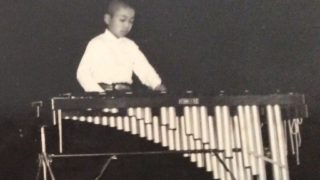
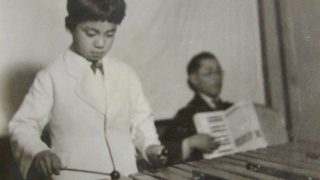
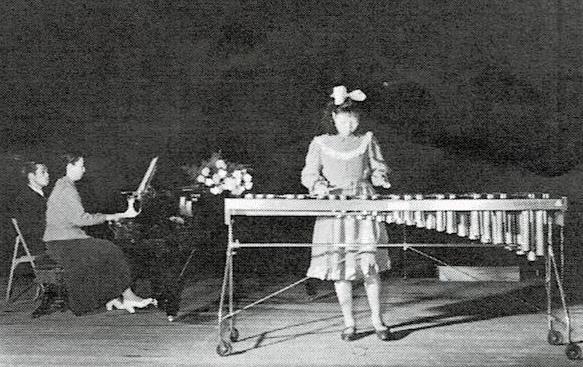
I was born in Takasaki, Gunma Prefecture. I used to listen to the SP records of Hiraoka Yoichi and Asabuki Eiichi that my father brought home whenever he went on a business trip to Tokyo, and play on a toy xylophone that my father also bought for me. When I started elementary school, my instrumental ensemble teacher took me to Asabuki Eiichi’s home in Takanawa, where I was able to take lessons. In a lovely room with a view of the garden full of greenery, I had the opportunity to play the Deegan Xylophone, and he corrected my mistakes in holding the four drumsticks and reading music. Furthermore, through his personality, he taught me that music is not just about technique, but is a culture that contains many different things.
Another unforgettable experience was when I went to Asabuki-sensei’s house on the day of the lesson, and people from all over Japan, including Tamura Bunji, came to take his lessons. It was there that I first met fellow players of the same instrument and people with the same aspirations. It was not a world of just me, like when I was in Takasaki; it was like a wide world of horizontal connections through marimba music. I remember as if it were yesterday how we finished the lesson and went home to Shinagawa Station, lively discussions about music.
After I entered high school, I began taking lessons from Professor Hiraoka Yoichi, and even after that Professor Asabuki Eiichi continued to write me letters from time to time and gave me the opportunity to meet him about once a year until the end.
When I was in the second year of junior high school, I thought about going on to high school and decided to take the entrance exam for the Tokyo University of the Arts Music High School. However, I couldn’t take the practical exam for marimba, and I only took the exam for snare drums, so I decided to become an apprentice under Professor Imamura Masao, who was a professor at the University of the Arts at the time, without any knowledge of snare drums. Professor Imamura taught me how to hold the snare drum sticks, and as we progressed to basic playing and practice pieces, I discovered the fun and excitement of rhythm, and I was completely captivated by its charm during my three years of high school.
Since the Faculty of Fine Arts and the Department of Japanese Music were both on my path, my circle of friends also expanded. In the free-spirited atmosphere of university life, I formed a jazz group with friends and enjoyed playing the drum set, played timpanis in the student orchestra, and taught many of my friends in the composition department the potential of marimba and other percussion instruments and performed with them in their works. Also, since this was the heyday of the Labor Music Association, the Tokyo University of the Arts Brass Association, conducted by Professor Yamamoto Masato, was also very active in concert tours. I was able to participate in these tours and gain experience performing as a soloist over 200 times, which proved invaluable for my subsequent performance activities.
Actually, I had a strong desire to see the world more broadly while living my student life, to broaden my musical horizons, and to get a part-time job because my family wasn’t that wealthy, but at that time, part-time work in music other than classical music was prohibited, and it was incredibly strict nowadays, and sometimes suspension notices were posted on the university notice board. However, I was quite nervous about being found out, so I participated as an extra in a Latin orchestra, which had a completely different atmosphere from the university, and learned a lot about Latin instrument playing from the professionals, and I also performed at a coffee shop called “Yaraiko” near Shinbashi Station, wanting to experience a jazz vibe.
“Yaraikou” is no longer in operation, but the stage was an elevator system that took us up to the second, third, and fourth floors, and we performed in front of the audience on each floor, then took about 60 minutes to come back down to the first floor. It was a rare experience that I had never had before. I did things like this many times and had a lot of fun during my time at university and in my major.
🎵 Bach / Partita for solo violin No.3 in E major, BWV1006
3.Gavotte en Rondeau
5. Menuet
7.Gigue
🎵 Clair Omar Musser / Prelude Op. 11 No. 3 in G Major
🎵 Clair Omar Musser / Etude op.6 No.2 in Ab Major
🎵 Monty / Czardas Piano : Tsunehito Nakai
🎵 Tadashi Yamanouchi /コティル(Cotyle) Piano : Tsunehito Nakai

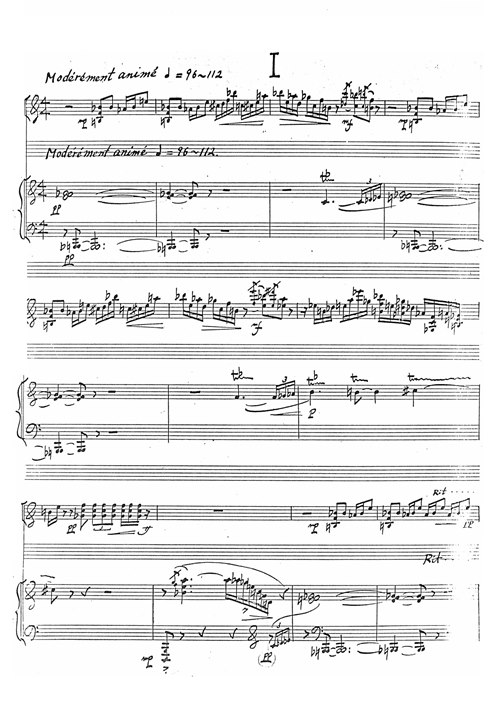
This was the first piece commissioned by Michiko Takahashi. World premiere in 1969, conducted by Masato Yamamoto, Tokyo University of the Arts Wind Orchestra Research Club, Tokyo Bunka Kaikan Revised premiere in 1972, conducted by Tadaaki Otaka, Gunma Symphony Orchestra, Gunma Music Center
* Song details→「日本の初期マリンバ オリジナル作品 (1960年代) ページ」
We can provide it in PDF format. If you would like the sheet music, please write on the information page.
🎵 Earl Hatch/ Introduction and Tarantella Piano : Mami Ukawa
🎵 Akira Miyoshi / 会話 (Conversation)
🎵 Toshiro Mayuzumi / Concerto for xylophone and orchestra Piano : Tsunehito Nakai
First movement
Second movement
Third Movement
🎵 Sabare Dance: Khachaturian Piano accompaniment version
🎵 Comedians Gallop / Chikara Barewski Piano accompaniment version